There's a ritual that plays out in teams everywhere, every day. A meeting ends. Someone says "I'll send a recap." An hour later, a slightly garbled summary email lands in everyone's inbox. Two days later, the same question that was resolved in the meeting gets asked again in Slack.
This isn't a discipline problem. It's a design problem. The tools we use to run meetings were built for a world where follow-through was someone's manual job — not a system responsibility. AI is changing that, but most people haven't seen what the real version looks like yet.
The Broken Handoff
Think about what actually has to happen for a meeting decision to become a completed task. The decision gets made verbally. Someone has to mentally flag it as an action item. They have to write it down — somewhere. That somewhere has to be visible to the right person. That person has to notice it and prioritize it. Then they have to actually do it and close the loop.
That's at least five failure points between "we agreed to do this" and "it got done." AI action item extraction removes the first three entirely.
What AI Action Item Extraction Actually Does
At its most basic level, an AI action item extractor reads a transcript and identifies sentences that describe work that needs to happen. But the good ones do considerably more than that.
First, they distinguish between action items and everything else. A meeting contains opinions, questions, context, tangents, decisions, and commitments. Extracting the commitments from that mixture is a genuine natural language understanding challenge — not just keyword matching on phrases like "will do" or "I'll take care of it."
Second, they try to assign ownership. "Someone should look into this" is the graveyard of every unfinished action item. Strong extraction models identify who said they'd do something and tag the item accordingly — using speaker diarization to link statements to names.
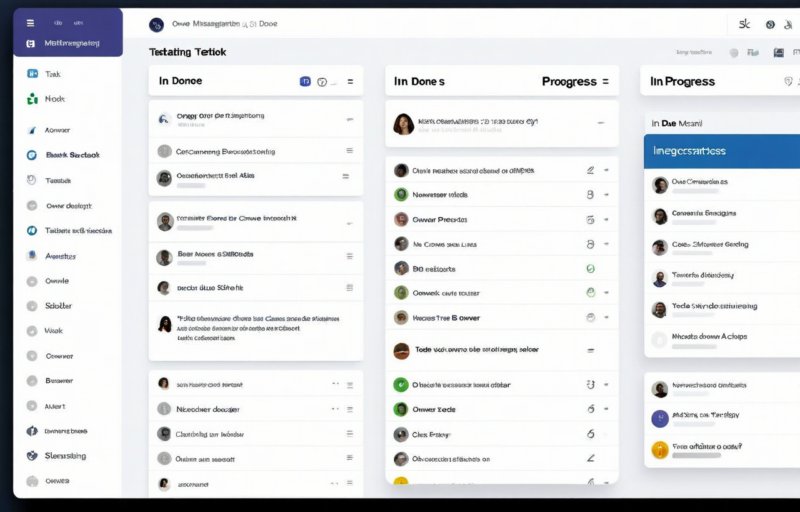
Third, they push items to the right place. An extracted action item that lands in a separate tool nobody uses is functionally useless. The value multiplies when items land in Notion, Jira, HubSpot, or wherever your team actually tracks work.
Why Accuracy in Extraction Matters as Much as Transcription
There's a temptation to treat the transcription layer and the extraction layer as separate problems. In practice, they're coupled. Action item extraction is only as good as the transcript it operates on.
"A 90% accurate transcript sounds fine — until you realize the 10% errors tend to cluster on proper nouns, technical terms, and low-frequency vocabulary. Which is exactly where action items live." — SmartyMeet Research Team
This is why SmartyMeet invests heavily in transcription accuracy before worrying about anything downstream. Our 22% lower word error rate isn't an abstract number — it directly improves the signal-to-noise ratio in the data our extraction model operates on.
The Ownership Problem
Even when extraction works well, ownership is the hardest part. In real meetings, people often commit to things ambiguously: "We should probably loop in legal." Who is "we"? When?
Good AI systems handle this in two ways. First, they flag ambiguous ownership for human review rather than silently assigning to the wrong person or dropping the item. Second, they learn from correction — when a user re-assigns an item, that signal can improve future assignments for that team's specific communication patterns.
SmartyMeet's confidence scoring flags items where ownership is ambiguous or where the model's confidence in the action interpretation is below threshold. These items land in a "needs review" queue rather than being auto-pushed to your tools — reducing noise and building trust in the system over time.
Integration Is the Multiplier
We've consistently found that teams adopt AI meeting tools much faster when items push to the tools they already use, rather than creating a new destination. The psychology here is simple: people have existing habits around their Notion workspace or their Slack channels. Asking them to open a new app after every meeting adds friction that compounds across dozens of meetings per week.
The ideal integration isn't just "items appear in Notion." It's "items appear in the specific Notion database for this project, tagged with the right status, attributed to the right person, linked back to the meeting transcript, and visible in the weekly standup template." That level of specificity is what turns AI assistance into genuine workflow acceleration.
What Changes at the Team Level
When teams run with AI action item extraction for a few months, we see consistent behavioral changes:
- Meeting agendas get tighter because people trust that decisions will be captured
- Recap emails stop being sent — there's nothing to recap that isn't already in the tools
- Accountability improves, not because anyone is being policed, but because visibility naturally raises standards
- Standup quality improves because everyone can see what was committed to in the last sprint's planning session
- New team members onboard faster because they can read through historical meeting action items to understand ongoing commitments
The Compounding Effect
The most underappreciated aspect of AI action item extraction is the compounding effect over time. In the first week, it saves a team 30 minutes on follow-up emails. In the first month, it closes a few action items that would have otherwise fallen through. In the first quarter, it fundamentally changes how the team relates to their commitments — because commitments are now searchable, attributable, and visible in a way they never were before.
That's the transition from a note-taking tool to a genuine intelligence layer for your team's work. And it starts with getting the handoff right.